Your Station's Digital Home, Built in Order: From the Domain to the App and Voice
Getting your audio live is only the first move, not the finish. Stations that build real audiences handle their online presence as a single system, not as a heap of disconnected pieces. This guide walks through the process in stages: you secure a name, you raise a dedicated radio station website, you add a mobile layer, and you wrap up with the voice and social layers. Follow them in this order, and each piece reinforces the next.
Why Build Order Counts
Many beginners rush to design, then patch in features on top. That approach usually backfires: the stream fights the page, and the parts never fully line up. A cleaner approach is to lock in the foundation before anything else. When your address, your site, and your signal come from one system, edits travel without extra work. BRLOGIC designs its platform around that logic, so the station team can put its energy into the show, not into technical upkeep.
Layer One: Claim the Name
Everything else depends on your domain, so choose it with thought. Good domain registration for radio stations begins with a name that is concise, clear when spoken, and true to your format. BRLOGIC handles this process as part of the setup, and the menu of endings is broader than people think. Traditional endings like .com, .net, and .org offer general recognition, while .fm and .show lean into music and entertainment, and .news fits a station built around reporting. Pick the one that matches your programming, then keep it renewed, because letting a domain expire gives your followers a broken link.
- Why Build Order Matters
- Layer One: Claim the Name
- Layer Two: The Web Hub Everything Points To
- Layer Three: Reach the Pocket
- Layer Four: Voice at Home and a Hub for Social
- Matching Each Channel to the Moment
- The Four Layers at a Glance
- Mistakes That Split a Station
- Plan the Whole Stack Before You Build a Piece
- Who Updates What, and How Often
- Give Listeners a Reason to Come Back
- Stability Is the Quiet Feature
Layer Two: The Web Hub Every Channel Points To
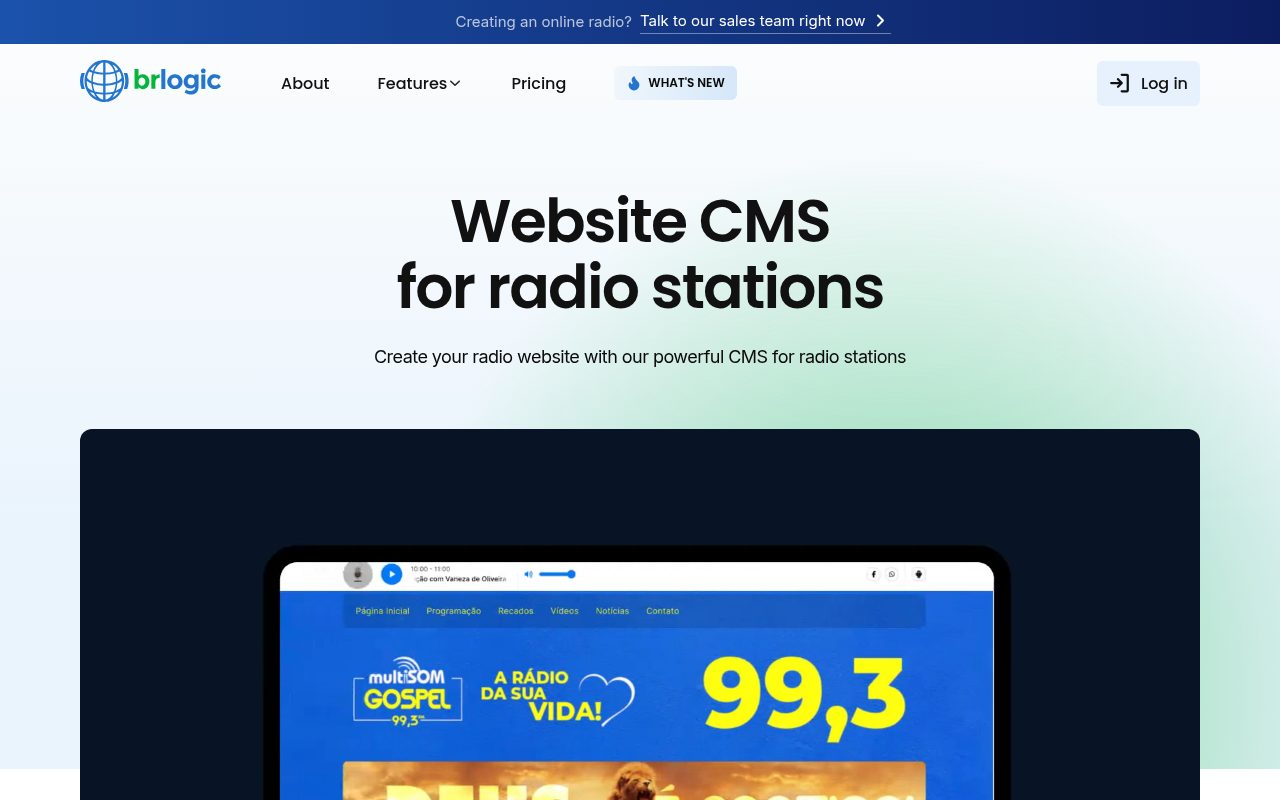
With the domain secured, the next step is your dedicated site. Think of it as the room every profile leads back to. A purpose-built website CMS for radio stations matters more than a generic blogging platform, because it ships with the parts a station actually relies on. BRLOGIC offers two layouts to begin with, and you customize them by dragging modules into place. Drop in your brand mark, pick your colors, and place the features that suit your programming. The included blocks go well beyond a player: a programming schedule and show profiles, a comment wall and song requests, a chat room for on-air interaction, plus votes, events, promotions, and a gallery. A station with a busy news team can even use the same site as a news hub.
Two starting layouts might seem narrow, but the flexibility lives in the blocks, not the template. Two broadcasters on the same theme almost never match once the artwork, the colors, and the block layout are set. Add the custom pages your project requires, place the banners for your advertisers, and the web home scales with the station, without a rebuild down the road.
Layer Three: Put the Stream on the Phone
The home base centers your presence, but the audience is glued to a phone. A dedicated radio station mobile app puts your audio just a tap from the home screen, without the search through a browser. BRLOGIC builds the app for iOS, Android, and a browser-installable PWA, keeping one visual identity across all three. A solid radio app builder connects a technical streaming backend and a simple layout. The app carries its own features: a schedule, a message board, and song requests, plus a wake-up alarm and a sleep timer. One important note on availability: some features vary by device and tier. The Google Play and App Store versions, along with extras like Android Auto and Apple CarPlay, come with the higher tiers or are available on request, while the Web App installs from a modern browser.
Continue reading at: radio station app builder
Layer Four: Voice in the Living Room and the Link in Your Bio
The final layer finds people where they already are: the living room and the social feed. An Alexa skill for radio station listeners lets someone tune in with a single command, directly from a supported Echo device. BRLOGIC releases the skill through its own developer account on Amazon, and adds the Radio Skills Kit (RSK), so a person can find your station without installing anything in advance. Skill plus RSK covers easy discovery and dependability at once.
The social side is the remaining piece of this layer. A links page for radio stations collects your Instagram, TikTok, X, Facebook, WhatsApp, and YouTube in one place, together with a player and your site link. Drop that single address in every bio, and wherever a listener discovers you, they reach a simple, clear path back to the station.
Matching Every Layer to the Listener
The payoff of building in layers is that each piece serves a distinct context. The web hub is where discovery and archives live, the app rides along on the commute and the workday, the Alexa skill owns the hours at home, and the links page catches the feed. Build them as one connected set, and a listener who finds you on Instagram at midday can be tuned in through a smart speaker by evening, with no broken link in between.
The Four Layers in Brief
Hold the map as four steps in order. Layer one is the foundation: a clean, spellable domain that listeners recall. Layer two is the hub: a home base every channel points to. Layer three is mobile reach: an icon on the phone that travels along. Layer four is home and feed: Alexa in the living room, and a single bio hub in each profile. Keep them in step, not piece by piece, and it all holds.
Mistakes That Scatter a Station
The most common misstep is treating every channel as a separate project. The web home somewhere, the mobile side elsewhere, and the stream on its own: the result is a maze. The stream disconnects, the hub crawls, and the mobile version shows old data. Another regular slip is picking fonts before fixing the flow. Colors are easy; a synced, reliable stack is the hard part. Avoid the patchwork, keep the pieces under one roof, and the cracks never form.
Plan the Entire Setup Before You Build a Piece
It pays to plan the finished set before you open a single tool. List the name you want and two backups, because the perfect one is sometimes already registered. Figure out which modules your show actually uses, so the hub goes live focused instead of crowded. Consider where your audience already spends time, and let that guide which layer you build next. A station that maps the stack saves time, starts cleaner, and scales in a straight line.
Who Edits What, and How Often
A common worry among new owners is that keeping all this fresh will mean a developer on call. That is exactly what a specialized system removes. Replacing a banner, shifting a show, or publishing news happens through a point-and-click editor, not a script. The host can update the schedule between breaks, while the song data and the player keep themselves in sync. That split is the goal: the platform takes care of the technical side, and your people handle the message.
More on this topic at: radio station website
Give Listeners a Reason to Come Back
A web home is not a poster you put up once. The layers you built give a listener room to do more than press play. Run the request feature during a live show, and the audience stops feeling like an outsider. Share the photo gallery from a recent event, and people who were there come back to find themselves. Adjust the schedule when a program moves, and a listener always knows when to listen. A hub kept current pays off each visit. Done right, a radio station website stops being a page and starts being a service.
Stability Is the Quiet Feature
None of these channels count if the stream cuts out. Behind the layouts and the blocks sits the part listeners never see. When the site, the app, and the skill draw from one reliable core, a track change lands everywhere simultaneously. That consistency is what a listener sees as professional, even when they could not explain it. BRLOGIC handles that work in the background, which is the whole idea: you shape the experience, and the platform keeps the plumbing quiet.
Common Questions
What should I set up first, the site or the app?
Start with the address, then the site. The app, voice, and social layers all point back to that site, so launching it up front keeps the rest together. Once the site is live, launching the mobile app and the other layers is straightforward.
Do I really need a mobile app for a young station?
It is not absolutely necessary to go live, but an icon on the home screen shapes the routine. The Web App is a low-friction first step. Inside the radio station app builder, you set the layout and decide which features show up, and you can move to the store apps over time, as your audience and your plan expand.
How does voice control improve retention?
Voice brings your station inside the home routine. When a listener can just ask a smart speaker to play you, the effort of finding you falls away. With RSK included, your station can be discovered without a separate install.
What matters most when choosing a content system?
Look for one designed for audio, not adapted from a blog. Built-in players, live track metadata, and a drag-and-drop editor let you manage the site without writing code. That frees your energy for the show.
How do I keep all my links tidy across social media?
Instead of spreading different links across every platform, a single links page holds them all: your player, your site, your app, and your socials. It gives your profiles one clear entry point, wherever a listener starts.
Can one platform run all of these layers?
Keeping the domain, site, app, voice, and links under one roof is radio station website what keeps them in sync. BRLOGIC links these channels together, so a change in the studio reaches every screen, without copy and paste from channel to channel.
Time to build your station's digital home, step by step?
You now have the map: claim the name, raise the hub, reach the phone, and close with voice and social. Each layer does its own job, and together they make one experience. The hard part is not any single tool; it is keeping them consistent as you grow.
That is where a single setup earns its place. A radio station website builder, an app for iOS, Android, and Web App, an Alexa skill with RSK, a links page, and handled domain registration, all drawing from one backbone. BRLOGIC provides that foundation, so your team focuses on the audience, not on juggling scattered tools at once. Audit your existing presence, identify the layer that is missing, and build it next. Do that and your station stops feeling scattered. The stream was only ever the beginning; the digital home is what holds a listener.